
10 Red Flags in a Roofing Estimate Before You Sign Anything

A roofing estimate is a sales document as much as a work description. Some are written to inform. Others are written to look attractive until the contract is signed. The difference usually shows up in what is missing, what is left open-ended, or what pressure is applied to decide quickly. Learning the common warning signs keeps the project under your control.
1. A Single Total With Almost No Scope
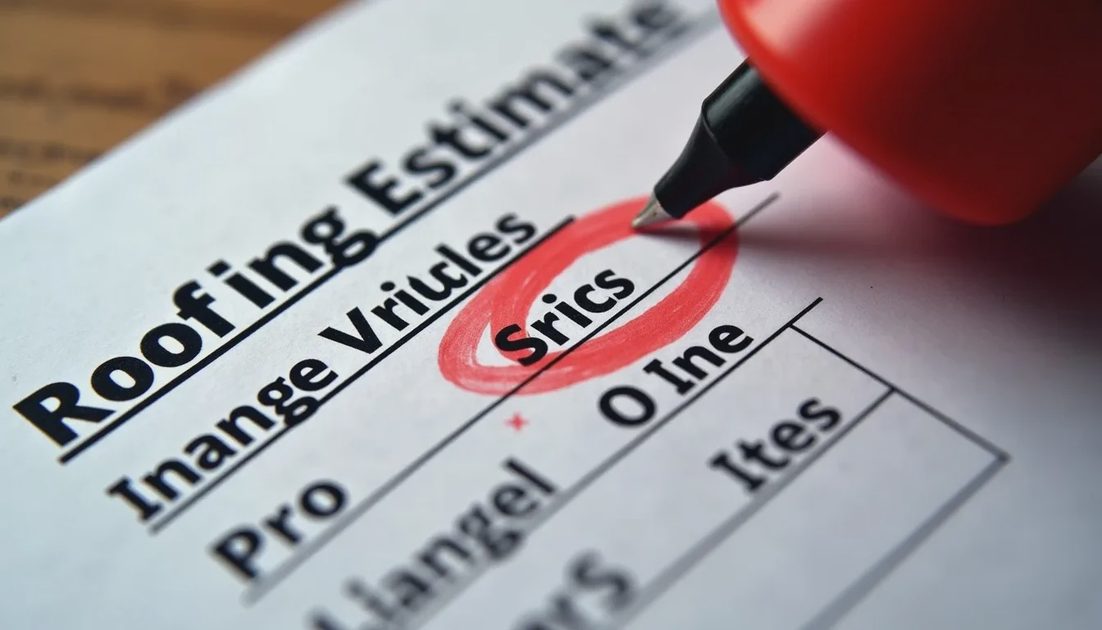
“Remove and replace roof – $14,200” tells you almost nothing. A complete estimate breaks the job into measurable pieces: tear-off method, number of layers, underlayment type, material brand and product line, flashing details, ventilation, cleanup, and warranties. When those elements are absent, the contractor retains flexibility to interpret the work however they choose once they are on the roof.
2. Vague Material Descriptions
“Architectural shingles” or “premium metal” is not a specification. Reputable proposals name the manufacturer and exact product—GAF Timberline HDZ, Owens Corning Duration, CertainTeed Landmark, or the specific metal panel system and gauge. Color is listed. Quantity is stated. Without those details, a lower-cost substitute can still claim to match the written description.
3. No Decking Replacement Allowance
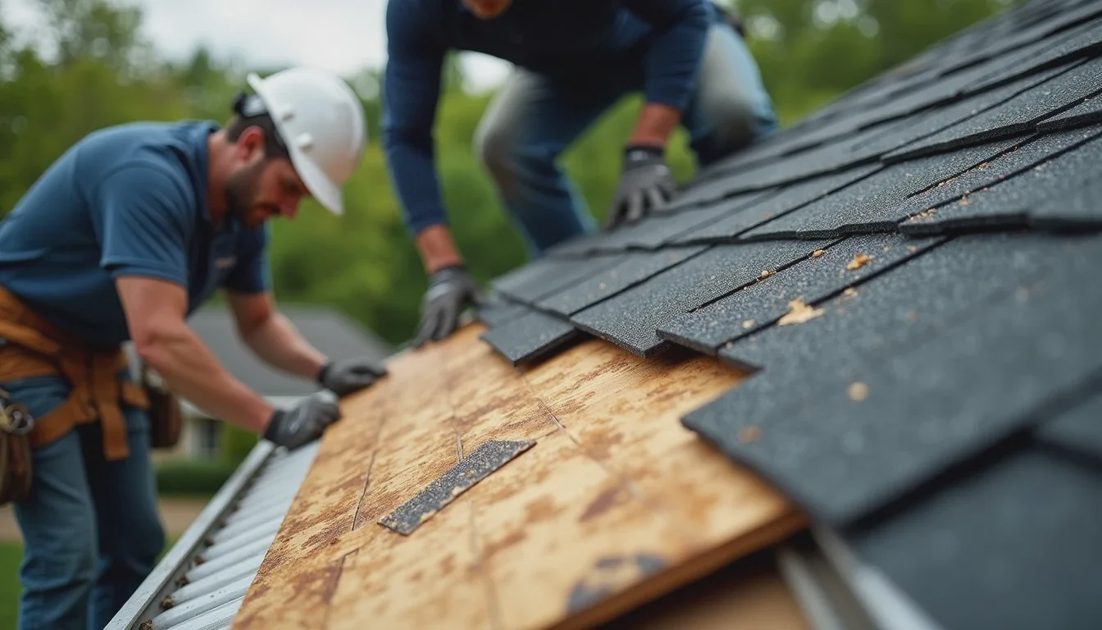
No one knows how many sheets of plywood or OSB are damaged until the old roof is removed. A professional estimate includes a clear per-sheet price and a simple approval process. When that line is missing, the homeowner often faces an open change order at the most inconvenient moment—after the surface is stripped and the crew is waiting.
4. Reused Flashing and Unclear Penetration Details
Step flashing, counter flashing, pipe boots, and chimney flashing are common failure points. A low bid frequently reuses existing metal that is already aged or improperly installed. The estimate should state whether new flashing and boots are included. Language such as “flashing as needed” leaves too much room for interpretation.
5. Missing or Minimal Ice-and-Water Shield
In most climates, self-adhered membrane at eaves, valleys, and penetrations is standard practice and often required by code. An estimate that lists only felt paper or a thin synthetic underlayment without defined ice-and-water coverage is cutting a critical water barrier. The savings appear small on paper and large when leaks develop later.
6. High Upfront Deposit Demands
A reasonable deposit (commonly 10–30 percent) helps the contractor order materials. Requests for 50 percent or more before any work begins, or full payment before the job starts, shift unnecessary risk to the homeowner. Payment schedules tied to progress—materials on site, tear-off complete, final inspection—are clearer and safer.
7. “Price Good Only Today” Pressure
Material costs do fluctuate, but legitimate contractors rarely force a same-day decision. Urgent deadlines are a classic sales tactic designed to prevent comparison shopping and careful review. A professional estimate carries a reasonable validity window, often 30 days, and allows time for questions.
8. No Mention of Permits or Code Compliance
Most jurisdictions require a permit for a full roof replacement. The estimate should state who pulls the permit and whether the fee is included or listed separately. Unpermitted work can create problems at resale or during future insurance claims. Silence on permits is not a neutral omission.
9. Weak or Missing Warranty Language
Manufacturer warranties and workmanship warranties are different. The estimate should name both. System warranties from major manufacturers usually require certified installation and specific underlayment and flashing details. A short workmanship warranty (one or two years) or vague “lifetime” claims without written terms deserve closer examination.
10. Reluctance to Put Details in Writing
If a contractor prefers verbal explanations, resists revising the estimate when you ask for missing items, or becomes defensive when you request brand names and unit prices, treat that as information. Clear documentation protects both parties. Resistance to clarity often signals that the numbers were never intended to hold up under scrutiny.
How These Red Flags Interact
One incomplete item can be an oversight. Two or three together usually form a pattern. A low total that also lacks material brands, omits a decking allowance, and reuses flashing is not a bargain. It is a different, smaller scope of work packaged to look competitive.
The opposite pattern is also useful. An estimate that itemizes materials by name, states a per-sheet decking price, includes new flashing and defined ice-and-water coverage, lists permit responsibility, and offers a clear payment schedule is easier to trust even if the number is not the lowest.
Practical Review Process
When estimates arrive, ignore the bottom line for the first pass. Check each proposal against the same list: named materials, tear-off details, underlayment and ice-and-water coverage, flashing, ventilation, decking allowance, permits, warranties, and payment terms. Convert totals to cost per square if the measured areas differ. Note every item that is present, absent, or left open-ended.
Ask for written clarification on anything missing. Most reputable companies will revise the document. Those that will not have already answered the most important question.
A roof replacement is expensive and disruptive. The estimate is the only document that defines what you are actually buying. Reading it for what is missing is often more valuable than focusing on the final number.
Keep Reading

Cost to Replace a 2000 Sq Ft Roof: Realistic Pricing Guide
Cost to replace a 2000 sq ft roof: compare asphalt, metal, labor, tear-off, and ...

Roof Cost per Square: What Homeowners Should Pay
Roof cost per square explained: compare asphalt, metal, tile, and labor prices, ...

Roofing Labor Cost Per Square: What Homeowners Should Pay
Roofing labor cost per square explained: compare installation rates, quote detai...
Owner Letters
0 lettersNo letters yet — be the first to write one.