
What a Roof Replacement Quote Should Include in 2026

A roofing quote that simply says “replace roof – $13,500” is not a quote you can trust or compare. In 2026 the better contractors write proposals that function like a scope of work. Every major decision—what comes off, what goes on, how it is protected, and who stands behind it—appears in writing. That level of detail is the only reliable way to judge whether one number is actually better than another.
The Core Sections Every Complete Quote Needs
A solid residential roof replacement quote in 2026 normally covers these areas.
Company and project basics
Name, address, license number, insurance certificate reference, date of inspection, property address, and an estimate expiration date. Material prices still move, so a 30-day validity window is common and reasonable.
Roof measurements
Total area in squares (one square equals 100 square feet), pitch or slope, number of existing layers, linear feet of ridges, hips, valleys, eaves, and rakes, plus a count of penetrations (pipes, vents, chimneys, skylights). The measurement method should be noted—physical tape, drone, or satellite. Satellite numbers are useful for initial pricing but still need ground verification on older or complex roofs.
Tear-off and disposal
Exact number of layers to be removed, whether the work goes to the deck, dumpster or trailer method, and who handles disposal fees. Overlay (new roof over existing) should be stated clearly if proposed; most full replacements still call for complete removal.
Decking inspection and allowance
A per-sheet price for plywood or OSB replacement and a clear process for approval once the old roof is off. No one knows the exact number of damaged sheets until the surface is exposed. A written unit price prevents open-ended change orders.
Materials Must Be Named, Not Described Vaguely
“Architectural shingles” is not a specification. A proper line item names the brand and product line—GAF Timberline HDZ, Owens Corning Duration, CertainTeed Landmark, or the exact metal panel system and gauge. Color is listed. Quantity in squares or linear feet appears next to each major component.
Underlayment receives the same treatment. Synthetic underlayment across the field is now standard on most quality jobs. Self-adhered ice-and-water shield coverage should be defined: eaves, valleys, penetrations, and any additional high-risk areas. Felt paper alone is no longer the default in many markets.
Flashing, drip edge, starter strip, ridge cap, pipe boots, and ventilation components each get their own lines or clear inclusion notes. Reusing old flashing is a common way to lower a bid; new step flashing, counter flashing, and pipe boots are usually the better long-term choice and should be stated.
Ventilation and Code Items
Ridge vent length, intake vents (soffit or other), and any required baffles or additional exhaust belong in the quote. Local codes often dictate minimum ventilation ratios. Permit responsibility and estimated cost should also appear. Some contractors include the permit fee; others list it as a separate pass-through. Either approach is fine if it is written down.
Warranties and Payment Terms
Manufacturer warranty duration and type (standard limited versus enhanced system warranty) need to be clear. System warranties usually require certified installation and specific underlayment and flashing details. Workmanship warranty length and what it actually covers—leaks, installation defects, wind damage within a set period—should be stated in plain language.
Payment schedule matters. A typical structure is a reasonable deposit (often 10–30 percent), a progress payment when materials arrive or tear-off is complete, and final payment after the job passes inspection and cleanup. Large upfront demands before any work begins raise questions.
Change-order process should be described: how extra work is priced, how the homeowner is notified, and how approval is documented.
Sample Line-Item Structure
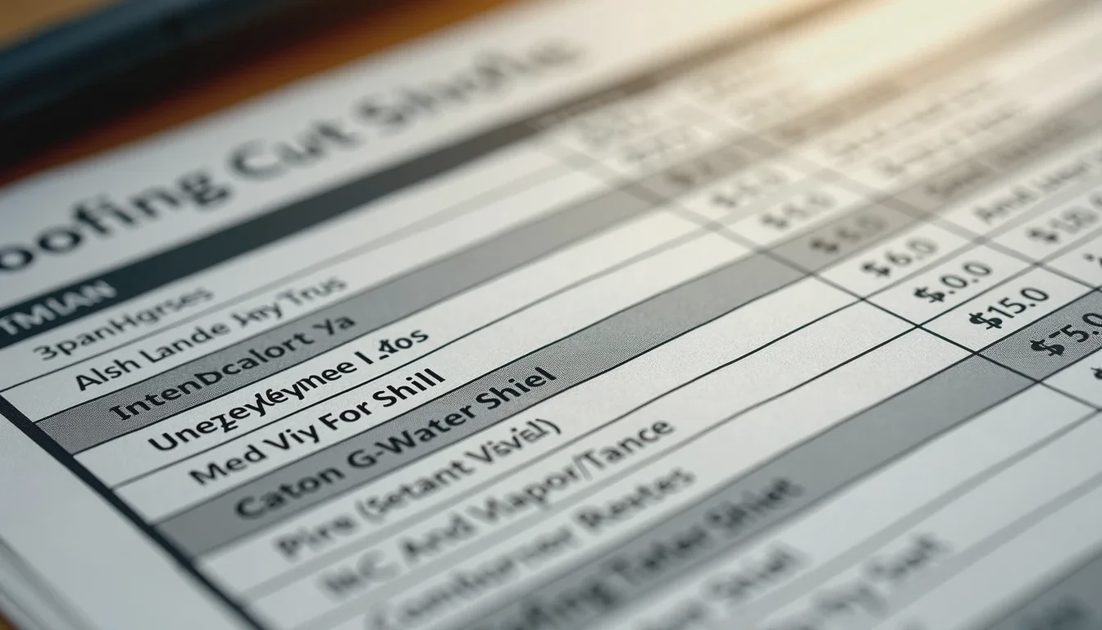
A clean quote often looks something like this in simplified form:
Category | Description | Quantity / Unit |
|---|---|---|
Tear-off | Remove 1 layer asphalt to deck, dispose | 22 squares |
Decking allowance | Replace damaged plywood/OSB | $X per 4x8 sheet |
Ice & water shield | Self-adhered at eaves, valleys, penetrations | 8 rolls |
Underlayment | Synthetic field underlayment | 22 squares |
Shingles | Brand + product line, color | 22 squares + waste |
Starter & ridge | Matching starter strip and ridge cap | Linear feet |
Flashing & boots | New aluminum drip edge, step flashing, pipe boots | As specified |
Ventilation | Continuous ridge vent + intake | Linear feet |
Cleanup | Magnetic sweep, debris removal, landscape protect | Included |
Permit | Local building permit | Allowance or actual |
Warranties | Manufacturer system + X-year workmanship | Stated |
Numbers and brands will vary by project. The structure itself is what makes comparison possible.

Why Vague Quotes Cost Money Later
When a proposal omits ice-and-water shield beyond the minimum, reuses old flashing, or leaves decking open-ended, the final invoice often rises. Homeowners who signed a low total discover the missing pieces only after the old roof is gone and the crew is on site. At that point leverage is limited.
Incomplete material specifications also create substitution risk. A contractor can install a lower-tier shingle or thinner underlayment and still claim the job matches the written description if the description was never specific.
How to Use the Quote When Comparing Bids
Once you have three or more proposals written to the same general scope, line them up by category rather than by bottom-line number. Check whether each includes full tear-off, the same underlayment standard, new flashing, named materials, and a decking unit price. Convert totals to cost per square if the measured areas differ slightly. Note warranty differences and payment terms.
The lowest number is useful only after the scopes match. A mid-range bid with complete details often represents better value than a low outlier that is missing critical protections.
A roof replacement is a significant project. The document that describes it should be specific enough that another qualified contractor could understand exactly what was promised. When the quote reaches that standard, the price becomes a fair reflection of the work rather than a starting point for later negotiation or disappointment.
Keep Reading

Cost to Replace a 2000 Sq Ft Roof: Realistic Pricing Guide
Cost to replace a 2000 sq ft roof: compare asphalt, metal, labor, tear-off, and ...

Roof Cost per Square: What Homeowners Should Pay
Roof cost per square explained: compare asphalt, metal, tile, and labor prices, ...

Roofing Labor Cost Per Square: What Homeowners Should Pay
Roofing labor cost per square explained: compare installation rates, quote detai...
Owner Letters
0 lettersNo letters yet — be the first to write one.