
Why Attic Ventilation Matters More Than Most Homeowners Realize
Most homeowners focus on the shingles they can see. The air movement in the attic below the deck has an equal or greater effect on how long those shingles last and how the roof performs in both heat and cold.
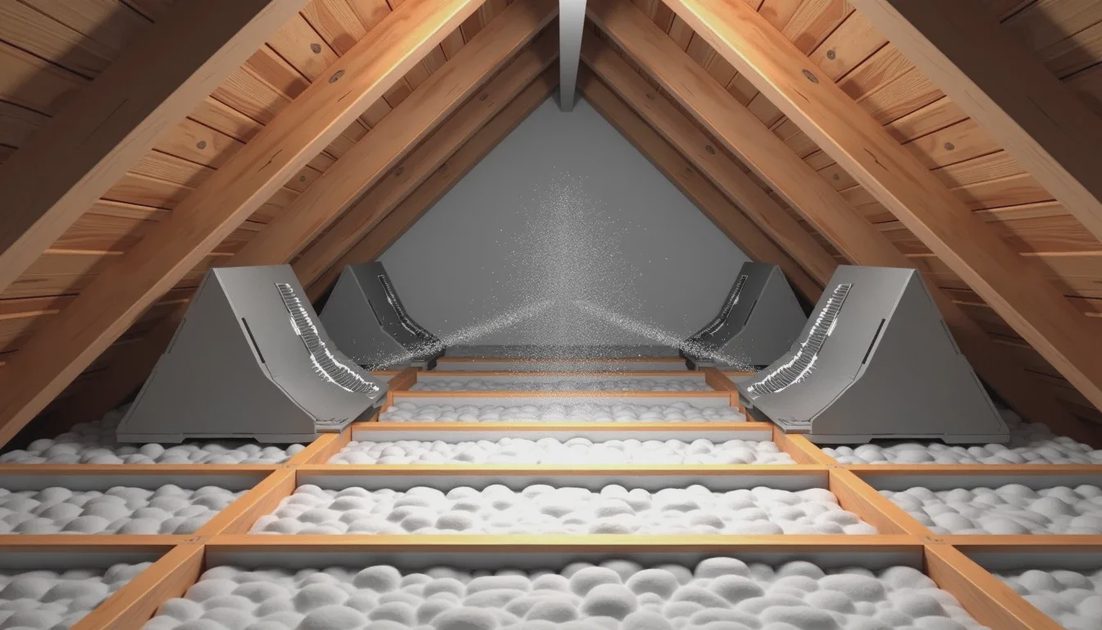
A properly ventilated attic allows outside air to enter low (usually at the soffits) and exit high (usually at the ridge). This continuous flow removes heat in summer and excess moisture year-round. When the flow is blocked or unbalanced, the roof deck becomes a heat sink in summer and a condensation surface in winter.
What Happens When Ventilation Is Inadequate
Summer Heat Buildup
On a hot day the roof surface can exceed 150°F. Without airflow beneath the deck, attic temperatures climb well above 120–140°F. That heat transfers into the shingles from below while the sun heats them from above. The asphalt binder softens and ages faster, granules release earlier, and the shingles become brittle sooner than their rated life would suggest.
Studies and field experience consistently show that poor ventilation can shorten asphalt shingle life by several years. The damage is gradual and often invisible until the surface shows widespread wear.
Winter Moisture and Ice Dams
In cold climates, warm air leaking from the living space into the attic melts snow on the upper roof. The water runs to the colder eaves and refreezes, forming an ice dam. Water then backs up under the shingles and into the roof structure. Balanced ventilation helps keep the entire roof deck closer to outside temperature, reducing the melt-refreeze cycle.
Moisture that remains in a poorly ventilated attic also condenses on cold surfaces, wetting insulation, promoting mold, and eventually damaging the sheathing.
Energy and Comfort Effects
A hot attic radiates heat into the rooms below, increasing cooling loads. In winter, moisture problems and ice dams create both comfort and repair costs. Ventilation alone does not replace proper insulation and air sealing, but it works with them to keep the roof system stable.
How Balanced Ventilation Works
Effective attic ventilation requires two parts working together.
Intake
Cool outside air enters at the lowest point of the roof, most commonly through continuous soffit vents. Baffles or channels keep insulation from blocking the path. Without adequate intake, exhaust vents simply pull air from the house or create negative pressure that does little useful work.
Exhaust
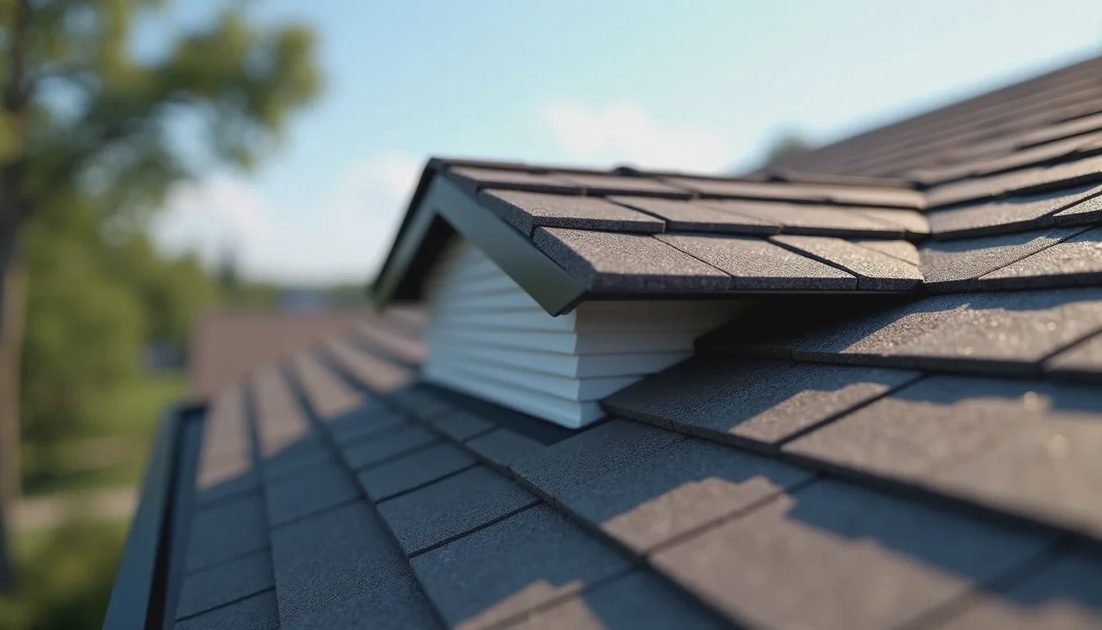
Warm air exits at the highest point, typically through a continuous ridge vent. Other exhaust options include box vents, turbine vents, or gable vents, but ridge vents paired with soffit intake are the most consistent and widely recommended for asphalt-shingle roofs.
The general guideline used by many codes and manufacturers is 1 square foot of net free ventilation area for every 150 to 300 square feet of attic floor area, with roughly balanced intake and exhaust. Local codes and specific roof designs can modify the exact ratio.
Common Ventilation Mistakes During Installation
Installing ridge vents without corresponding soffit intake
Blocking soffit vents with insulation
Mixing exhaust types that compete with each other (for example, ridge vents plus multiple box vents on the same roof)
Sealing the attic too tightly without providing a designed ventilation path
Ignoring ventilation entirely on lower-slope or complex roofs
These errors often remain hidden until heat-related shingle aging or ice-dam leaks appear years later.
Ventilation and Manufacturer Warranties
Many asphalt shingle warranties require adequate attic ventilation as a condition of coverage. When a claim is filed for premature aging or moisture-related issues, the manufacturer may inspect the ventilation system. Inadequate ventilation is a frequent reason coverage is limited or denied.
What Homeowners Can Check
Some indicators are visible without walking the roof:
Continuous ridge vent along the peak (or other clear exhaust)
Open soffit vents that are not painted over or blocked by debris
Relatively even temperatures in the attic compared with outside conditions on a hot day
Absence of heavy condensation, frost, or mold on the underside of the deck in winter
Lack of recurring ice dams along the eaves
A professional inspection can measure net free area and confirm that intake and exhaust are balanced.
Ventilation During a Roof Replacement
A full tear-off is the ideal time to correct ventilation problems. Adding or improving ridge vents, clearing soffit pathways, installing baffles, and ensuring proper balance adds relatively little cost compared with the value of protecting the new shingles. Skipping this step leaves the new roof exposed to the same heat and moisture stresses that aged the old one.
Attic ventilation is not a dramatic feature. It does not change the appearance of the house. Yet it is one of the few factors that consistently influences how long asphalt shingles actually last and how well the roof handles both summer heat and winter cold. Treating it as an essential part of the roofing system, rather than an optional extra, protects the investment in the materials above it.
Keep Reading

How to Find the Top Roofing Companies Near Me
top roofing companies near me: compare local roofers by materials, quotes, warra...

How to Find the Best Roofing Company for Your Home
Find the best roofing company for your home with practical advice on quotes, mat...
How to Find the Best Roofers for Your Home
Find the best roofers for your home with a practical guide to quotes, materials,...
Owner Letters
0 lettersNo letters yet — be the first to write one.