
Moss, Algae, and Debris: Quiet Problems That Shorten Roof Life
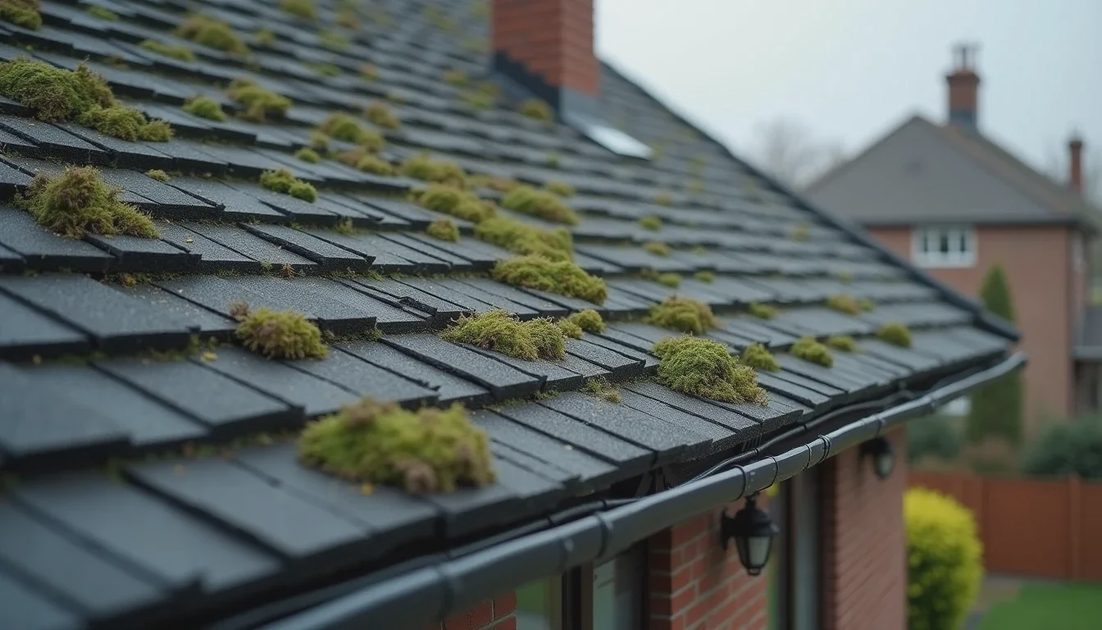
Moss, algae, and debris are often treated as cosmetic issues. In reality they create persistent moisture against the shingle surface, raise the risk of granule loss, and can shorten the functional life of an asphalt roof. The damage is gradual, which is why many homeowners notice the staining long before they notice the accelerated aging underneath.
Algae: The Dark Streaks
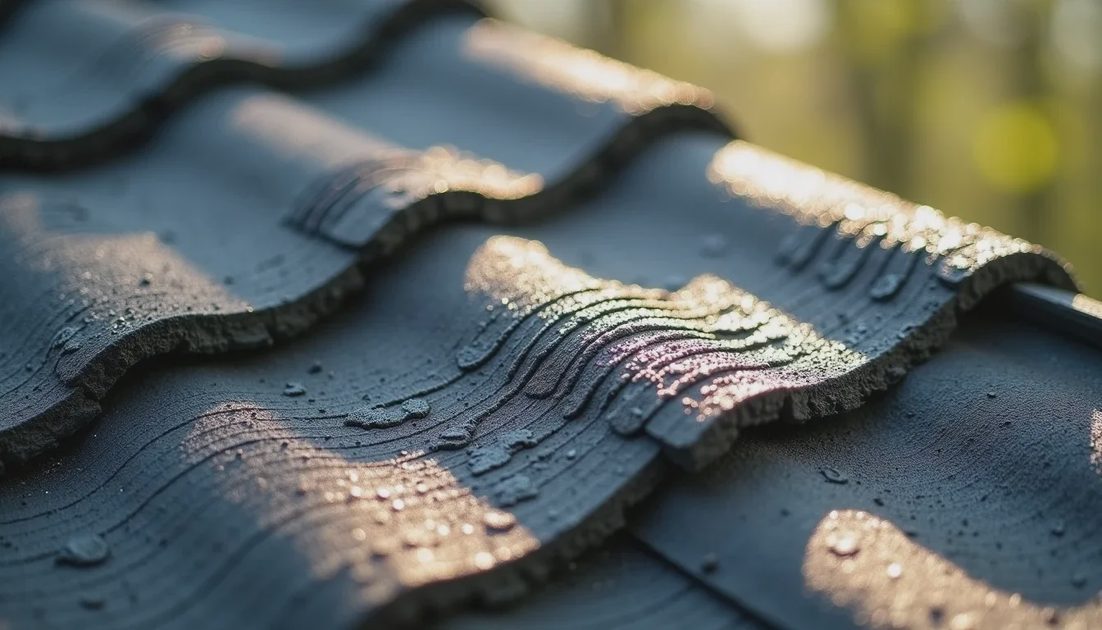
The black or dark-green streaks common on north-facing and shaded slopes are usually caused by a type of blue-green algae (Gloeocapsa magma). The organism feeds on carbonate filler in the shingles and thrives in humid conditions with limited sunlight.
Effects on the Roof
Algae itself does not eat through the shingle, but it holds moisture against the surface and can contribute to faster granule loss over time. Heavy growth also makes the roof look older than it is, which can affect curb appeal and buyer perception.
Prevention and Treatment
Many modern architectural shingles include algae-resistant formulations that slow growth for a number of years. Once staining appears, gentle cleaning with products approved for asphalt shingles can improve appearance. Avoid high-pressure washing; it removes granules and shortens shingle life. Zinc or copper strips installed near the ridge can release ions that inhibit regrowth when rain washes over the roof.
Moss: The Moisture Trap
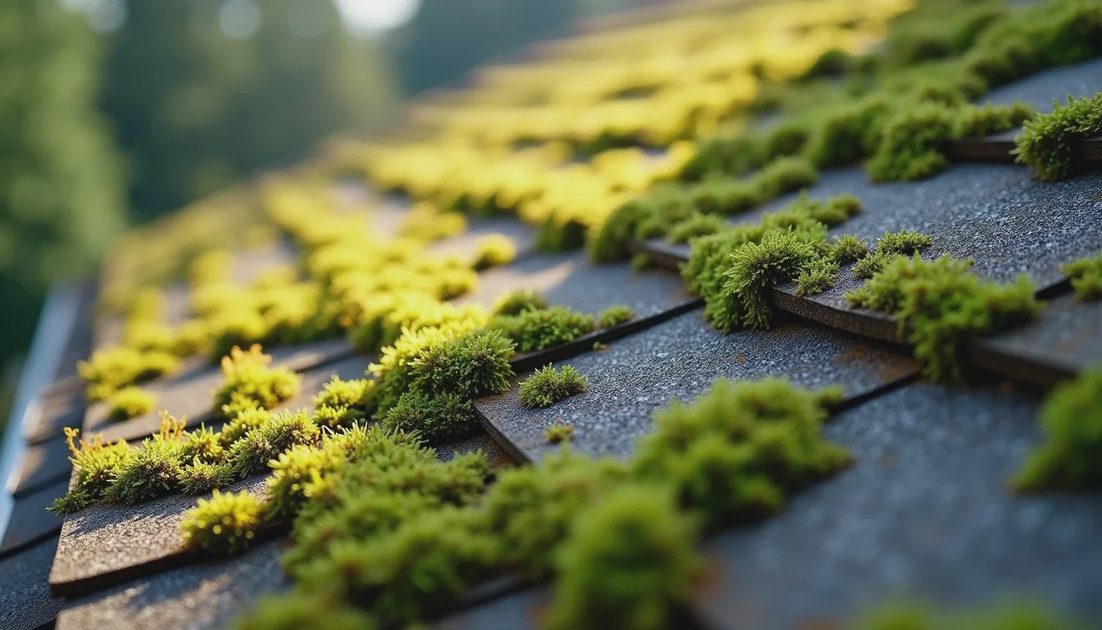
Moss is more aggressive than algae. It grows in thicker clumps, especially on shaded, low-slope, or debris-prone areas. The root-like structures work into the shingle surface and the spaces between shingles.
Why Moss Is Damaging
Moss holds water like a sponge. Prolonged moisture softens the asphalt, loosens granules, and can eventually lift shingle edges. In freeze-thaw climates the trapped water expands and contracts, accelerating cracking and separation. Left alone, moss can create leaks and force earlier replacement.
Removal Approach
Moss should be removed carefully. Soft brushing when the moss is dry, combined with appropriate cleaning solutions, is safer than aggressive scraping or pressure washing. After removal, addressing the conditions that allowed growth—shade, debris, poor drainage—reduces the chance of rapid return.
Debris: Leaves, Needles, and Organic Buildup
Overhanging trees drop leaves, needles, and twigs that collect in valleys, against chimneys, and along eaves. This debris keeps the underlying shingles wet long after rain stops.
Consequences
Constant moisture promotes both moss and algae. It also creates dams that can force water sideways under shingles. Valleys are especially vulnerable because they already concentrate water flow. Gutters clogged with debris overflow and soak the fascia and roof edge.
Practical Maintenance
Clear valleys and roof surfaces of heavy debris at least once or twice a year, more often under dense tree cover. Keep gutters and downspouts free-flowing. Trimming branches back from the roof reduces the volume of debris and increases sunlight, which itself discourages moss and algae.
Climate and Roof Design Factors
These problems are more common in:
Humid regions with frequent moisture
North-facing or heavily shaded slopes
Low-slope sections that drain slowly
Roofs with complex valleys and limited sunlight
Homes in dry, sunny climates see far less moss and algae activity. The same shingles can perform very differently depending on exposure and tree cover.
What Homeowners Can Do Without Climbing the Roof
Observe staining patterns and moss growth from the ground or with binoculars
Keep gutters clean so water moves off the roof efficiently
Trim trees to increase sunlight and reduce debris
Schedule periodic professional soft cleaning when growth becomes heavy
Consider algae-resistant shingles or metal ridge strips at the next replacement
Professional cleaning services that specialize in roofs understand which products and methods protect the shingles. General pressure-washing approaches often do more harm than good.
Connection to Overall Roof Life
A roof that stays relatively clean and dry ages more evenly. One that remains chronically damp in shaded sections loses granules faster, develops soft spots sooner, and reaches the end of its reliable service life earlier. The difference is rarely dramatic in a single year, but over a decade or more it becomes measurable.
Moss, algae, and debris are manageable with basic attention. Ignoring them does not usually cause sudden failure, yet it quietly reduces the return on the original roofing investment. Treating these issues as part of routine home maintenance rather than pure aesthetics helps the shingles last closer to their expected service life.
Keep Reading
How to Prepare Your Home for a Roof Replacement
A smooth roof replacement depends on more than the crew. Clearing access, protec...
How Long Does an Asphalt Shingle Roof Really Last?
Manufacturer ratings of 25 or 30 years rarely match real-world results. Most arc...
Repair or Replace? How to Make the Call Without Guessing
Repair makes sense for young roofs with localized damage and sound decking. Repl...
Owner Letters
0 lettersNo letters yet — be the first to write one.